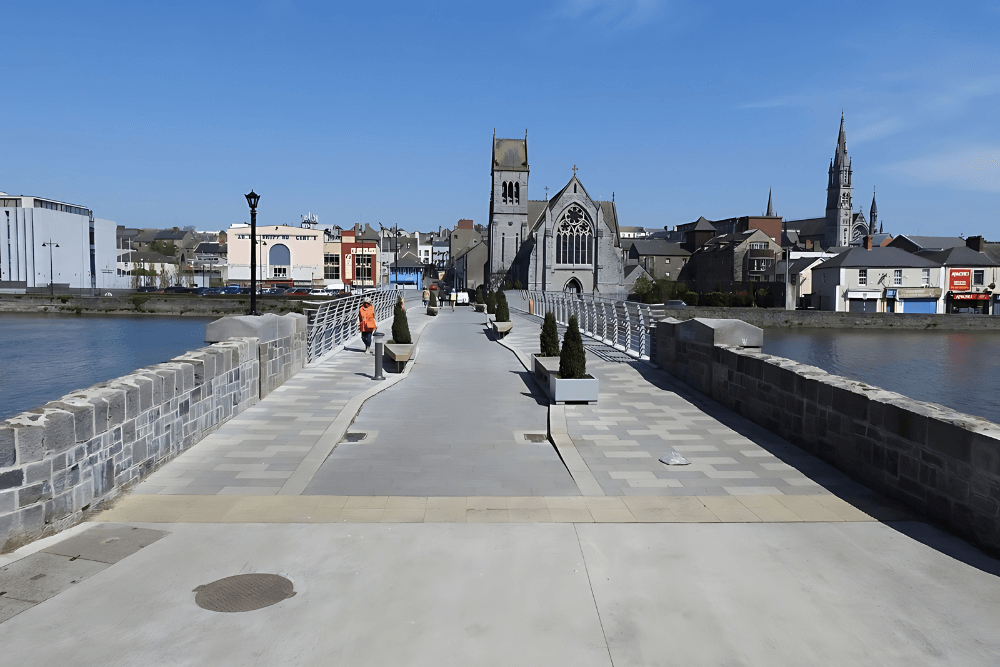
Drogheda, a town on the border of Counties Louth and Meath, has an estimated population of around 44,135 as of the 2022 census, making it one of the largest towns in Ireland. The broader Drogheda area, including East Meath, has a combined population exceeding 67,000 (BreakingNews.ie) (Central Statistics Office).
Medical Facilities
- Our Lady of Lourdes Hospital: The main public hospital, offering a wide range of acute services and affiliated with the Royal College of Surgeons in Ireland.
- Cottage Hospital: A smaller facility providing outpatient services.
- Private Clinics: Various specialist practices available throughout the town.
Culture and Heritage
- History: Notable historical sites include St. Laurence's Gate and Millmount Fort, reflecting Drogheda's medieval past.
- Arts: The Droichead Arts Centre and the annual Drogheda Arts Festival highlight the town’s vibrant arts scene.
- Music: Hosts events like the Fleadh Cheoil, celebrating traditional Irish music.
- Literature: Connections to poets and authors like Francis Ledwidge and Anthony Trollope.
- Sports: Home to Drogheda United F.C., competing in the League of Ireland Premier Division.
Crime Rates
- Drogheda has faced significant issues with gang-related violence and drug-related crimes in recent years. However, other types of crime align more closely with national averages. Efforts are ongoing to address these challenges through targeted police operations and community initiatives (BreakingNews.ie).
Notable Features
- St Laurence's Gate: A well-preserved barbican.
- Millmount Fort: Offers panoramic views of the town and Boyne Valley.
- St Peter's Church: Houses the shrine of St. Oliver Plunkett.
- Highlanes Gallery: A municipal art gallery in a former Franciscan church.
- Boyne Valley: Nearby, rich in historical sites like Newgrange.
- Drogheda Port: A historically significant commercial port.
- Boyne Viaduct: An impressive railway bridge.
Economy
- International Companies: Hosts firms like State Street and Coca-Cola International Services.
- Commuter Town: Many residents commute to Dublin, leveraging its proximity (about 50km away).
- Tourism: The town’s historical sites and the Boyne Valley attract visitors.
- Retail: Several shopping centers contribute significantly to local employment.
Challenges
- Crime: Ongoing efforts to combat gang-related violence.
- City Status: Campaigns to recognize Drogheda as a city to streamline governance and attract investment (BreakingNews.ie).
- Infrastructure: Need for improved transport links.
- Economic Development: Push for more local, high-quality employment to reduce dependence on Dublin.
Drogheda's future development will hinge on effectively addressing these challenges while capitalizing on its historical heritage and strategic location (BreakingNews.ie) (Central Statistics Office).
Medical Facilities
- Our Lady of Lourdes Hospital: HSE
- Cottage Hospital: HSE Services
- Private Clinics: Bon Secours Health System
Culture and Heritage
- Droichead Arts Centre: Droichead Arts Centre
- Drogheda Arts Festival: Drogheda Arts Festival
- Fleadh Cheoil: Fleadh Cheoil
Notable Features
- St Laurence's Gate: Visit Drogheda
- Millmount Fort: Millmount Museum
- St Peter's Church: St Peter's Church
- Highlanes Gallery: Highlanes Gallery
- Boyne Valley: Discover Boyne Valley
General Information
- Visit Drogheda: Visit Drogheda
- Drogheda Garda Station: Garda.ie
Drogheda
Population: Drogheda, located on the border of Counties Louth and Meath, has a population of approximately 41,000, making it one of the largest towns in Ireland. It has experienced significant growth in recent decades, partly due to its proximity to Dublin and its role as a commuter town.
Medical Facilities: Drogheda's healthcare is primarily served by:
- Our Lady of Lourdes Hospital: The main public hospital for the region, providing a wide range of acute services. It's a teaching hospital affiliated with the Royal College of Surgeons in Ireland.
- Cottage Hospital: A smaller facility providing some outpatient services.
- Various private clinics and specialist practices throughout the town, including those part of the Bon Secours Health System.
Like many areas in Ireland, Drogheda faces challenges with waiting times in the public health system, particularly for certain specialized services.
Culture: Drogheda has a rich cultural heritage dating back to medieval times:
- History: The town has numerous historical sites, including St Laurence's Gate, a well-preserved barbican of the original town walls, and Millmount Fort, which offers panoramic views of the town.
- Arts: The Droichead Arts Centre is a hub for visual and performing arts. The town also hosts the Drogheda Arts Festival annually.
- Music: Drogheda has a vibrant music scene, from traditional Irish music to contemporary genres. The Fleadh Cheoil, Ireland's largest traditional music festival, was hosted in Drogheda in 2018 and 2019.
- Literature: The town has literary connections, being near the birthplace of poet Francis Ledwidge and featured in works by authors like Anthony Trollope.
- Sport: Drogheda United F.C. is the town's soccer team, playing in the League of Ireland Premier Division.
Crime Rates: Drogheda has faced significant challenges with crime in recent years:
- Gang-related violence has been a major issue, with a feud between criminal groups causing concern among residents and attracting national attention.
- Drug-related crime is a significant problem, with efforts ongoing to address this issue.
- While violent crime rates related to gang activity have been high, other types of crime are more in line with national averages.
- Anti-social behaviour and petty crime remain ongoing concerns.
The Drogheda Garda Division has implemented targeted operations to address gang-related crime and works with community organizations on crime prevention initiatives.
Notable Features:
- St Laurence's Gate: A well-preserved barbican of the original town walls, it's one of the finest of its kind in Europe.
- Millmount Fort: A martello tower offering panoramic views of the town and the Boyne Valley.
- St Peter's Church: Home to the shrine of St. Oliver Plunkett, whose preserved head is on display.
- Highlanes Gallery: The town's municipal art gallery, housed in a former Franciscan church, featuring both contemporary and historical exhibitions.
- Boyne Valley: While not in Drogheda itself, this nearby area is rich in historical sites, including Newgrange and the Battle of the Boyne site.
- Drogheda Port: An important commercial port with a long history.
- Boyne Viaduct: An impressive railway bridge spanning the River Boyne, completed in 1855.
Economy: Drogheda's economy has evolved significantly in recent decades:
- The town has attracted some international companies, including State Street and Coca-Cola International Services.
- Its proximity to Dublin (about 50km) has led to Drogheda becoming a significant commuter town.
- The port continues to play a role in the local economy, though not as prominently as in the past.
- Tourism is a growing sector, with Drogheda leveraging its historical sites and proximity to the Boyne Valley.
- Retail is a major employer, with several shopping centres in and around the town.
Challenges: Drogheda faces several ongoing challenges:
- Crime: As mentioned earlier, gang-related crime has been a significant issue in recent years.
- Identity: There's an ongoing debate about whether Drogheda should be classified as a city rather than a large town.
- Infrastructure: As the town has grown, there have been calls for improved infrastructure, particularly in terms of transport links.
- Economic Development: While the town has attracted some investment, there's a push for more high-quality employment opportunities to reduce commuting to Dublin.
- Urban Sprawl: Rapid growth has led to concerns about the sustainability of Drogheda's expansion and its impact on surrounding areas.
Despite these challenges, Drogheda has significant potential. Its rich history, strategic location between Dublin and Belfast, and growing population position it well for future development. The town's development plan focuses on sustainable growth, improving quality of life for residents, and attracting more investment to create local employment opportunities. Drogheda's future will likely be shaped by how it addresses its current challenges, particularly in terms of crime and economic development, while leveraging its strengths such as its historical heritage and strategic location. The town's ability to create a distinct identity separate from its role as a Dublin commuter town will be crucial in determining its long-term prosperity and character.
Useful Healthcare Recruitment Links
Overseas Doctors to Ireland Recruitment
Overseas Nurses to Ireland Recruitment
Overseas Care Workers to Ireland Recruitment